


Mobilization Joy

Are you enjoying Jesus? If not, you might be on your way to burnout. Many mobilizers are stressed and under a lot of pressure to hit their goal of the numbers of new missionaries. Mobilizers are driven, passionate people who care deeply about God and His mission in the world. But if we’re not careful, mobilization and recruitment can often lead to burnout. 

Do you find yourself striving to hit the numbers? In his book, Renovated, Jim Wilder writes, striving is what we do when a good idea is not working well enough.He notes that “striving is evidence we are overly-focused.“ There’s a difference between doing what God wants you to do and becoming the kind of person who does what God wants you to do. We often strive to do all the tasks at the expense of our own joy and spiritual growth. 

Have you lost the joy of mobilization? Do you rejoice even when the numbers of new missionaries you’re sending are lower than you expected? Should we only be grateful when we hit our recruitment goals? We can live thankful and joyful every day as we partner with God who calls and sends new missionaries. 

Mobilization is a lot like gardening. We can prepare the soil, plant the seed, give it water, and create the environment that gives it enough sunshine, but God makes it grow. It’s a partnership with God. What joy it is to work together for mobilization fruit!

If you feel like you’ve lost your mobilization joy, here are a few suggestions to get it back:

  1. Stop striving. Jesus is the Lord of the harvest, not you. So let Him be Lord. Take time off to be with Jesus all day. Enjoy your time with Him. He loves being with you. Do things that rejuvenate you.
     

  2. Study what the Bible says about joy. Start with Acts 13:49-52. Why were the disciples filled with joy in the midst of persecution? Other portions of Scripture to consider are:  Luke 2:10, 6:23, 2 Cor. 8:2, and Phil. 1 and 2. 
     

  3. Celebrate the small wins. You may need to redefine mobilization success. We created the Mobilization Continuum to help mobilizers see the progress (wins) in someone’s commitment to and involvement in missions. Rejoice when you see God at work in someone you’re discipling or mobilizing.
     

  4. Love the people you work with. This may come easy for some and be more difficult for others. When you practice loving those in your in-group well, you become a more joyful person. Work to heal and restore any broken relationships and value others above yourself. Be humble, transparent, and vulnerable with your coworkers. 
     

  5. Live each day gratefully. Gratefulness produces joy. When was the last time you thanked God for the ministry He has you in right now? Avoid complaining and be thankful for all He has done in and through you. You can’t be grateful and angry at the same time.
     

  6. Listen to this worship song based on Psalm 98 titled, Jubilationhttps://youtu.be/-jJzXgKYFqA?si=lSjAlKlmjADTinBi
     

  7. Don’t forget your why. Do you remember when Jesus called you into this mobilization ministry? You are helping to make His name famous in all the earth! People are being saved and discipled because of your ministry. What a joy! 

The first question of the Westminster Catechism is, “What is the chief end of man?” And the answer? “Man’s chief end is to glorify God and to enjoy Him forever.”

Are you enjoying Jesus today? I’m praying you are filled with His joy as you mobilize His people to the ends of the earth!

Dave Jacob
Chief Servant Officer
Gospel Mobilization

Subscribe

Subscribe to receive relevant articles like this in your inbox.
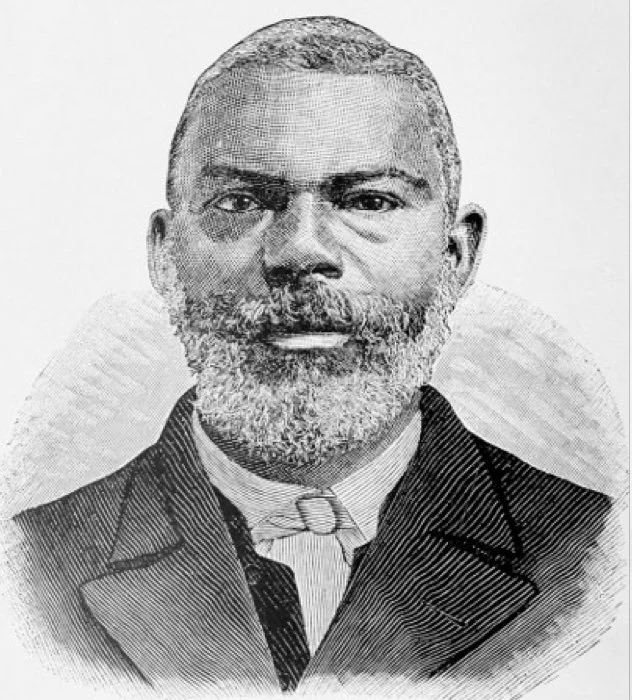
First American Missionary: George Liele Sails to Jamaica in 1782

Born a slave in what is now Virginia, George Liele was taken to Georgia, where he was converted in 1773 in the church of his master, Henry Sharp. He soon became concerned about the spiritual condition of his fellow slaves and began preaching to them. In 1775 he was ordained as a missionary to work among the black population in the Savannah area. Like many other slaves, he sided with the British in the Revolutionary War, as did his master, who set Liele free in 1778.

In order to be evacuated with other royalists and British troops, Liele obtained a loan and accepted the status of indentured servant to pay the passage for himself, his wife, and his four children on a ship bound for Jamaica in 1782. He soon repaid the debt and secured permission to preach to the slaves on the island.

By 1814 Liele’s efforts had produced, either directly or indirectly, some 8,000 Christians in Jamaica.


Early Chronology of U.S. Black Missionary Sending

1782. George Liele, Kingston, Jamaica — the first American missionary
1782. David George, Hector Peters, Sampson Calvert, Nova Scotia, Sierra Leone.
1783. Moses Baker & George Gibbions, West Indies.
1790. Prince Williams, Bahamas.

(For reference:  1792. William Carey left for India., 1812. Adoniram Judson went to Burma.)

It was African Americans who led the way in the modern missions sending movement. Even though William Carey (sent from England) is considered the Father of Modern Missions and Adoniram Judson (sent from the U.S.) is often referred to as the first American missionary, the facts speak otherwise.

To learn more on this topic order this book from our friends at William Carey Publishing. Also, check out the National African American Missions Council.

Dave Jacob
Chief Servant Officer
Gospel Mobilization

Subscribe

Click Subscribe to receive relevant articles like this in your inbox.

5 Lessons from a Study on Cheering

In 2022, three sport psychologists interviewed runners to discover what kind of cheering helped them and what type of cheering didn’t. They discovered the most helpful type of cheering was either instructional or motivational. Cheering that was unhelpful included criticisms and shouts to dig deeper when the runner already felt that they were giving all they had. Based on their research, here’s their advice for how to best cheer for someone running in a race, and it just might work for those we are mobilizing as well:

  • Give useful information about the course. What’s coming up next? How far until the next water station?

  • Be clear and specific. Cheering, “Less than a mile to go!” is more effective than, “You’re almost there!”

  • Give praise for their effort. A phrase as simple as, “Nice work!” can go a long way.

  • Make it personal. Make eye contact with the runner. If possible use their name or bib number.

  • Be authentic. Speak the truth and be careful not to mislead. There’s no need to tell them they can catch up with the runner that’s obviously way ahead and running faster than them.

  • Build confidence. Help them believe in their ability to complete tasks or achieve a goal. Let them know how well they’re doing and express your belief that they can keep pushing.

While we should be cautious about modeling our mobilization efforts and strategies on sports psychology, there are some useful tips for mobilizers as we cheer on those in our sphere of influence. 

     1. Give clear and specific information about your mobilization process. Say things like, “Once you fill out the inquiry form, a mobilizer will text you within 24 hours to set up a time to talk about what God is doing in your life.”

     2. Inspire and educate. Don’t say things that would discourage them. For example, don’t say, “If you’re struggling with self-control, you’ll never make it on the missions field.” Rather say, “I can see God working in your life. Six months ago, that particular situation would have made you angry, but I saw you handle that with a lot of grace and respect."

      3. Make it personal. Be friends with those you’re mobilizing, especially if you’re the same gender. Don’t consider it so much of a job you have to do, but a friendship you get to have. Have them over for dinner, go to a concert together, or invite them to meet you at the park to take a walk.

     4. Be authentic, transparent, and vulnerable. Don’t just share the best parts of life on the missions field or the best aspects of your agency, but talk about the struggles, disappointments, and things you’re learning. If you want the younger generations to trust you (and you do because they won’t go with your agency if they don’t trust you), share some of the things your agency is working on. You can say something like, “Our agency really values member care and it’s one area where we feel like we’re pretty strong, but we are currently struggling with some of our systems that are slow and out-dated, so that’s an area we are working on as an organization right now.”

     5. Give them assurance. The younger generations feel their weaknesses more than their strengths, so an important part of the mobilizer’s role is reassuring them along the way. Say something like, “With God’s help, you can do hard things.” or “This might be a difficult time right now, but I believe in you and what God is doing in your life. You are right in the center of God’s will right now, so walk in the confidence that He’s in control of your today.”
 

I’m writing this article at our local YMCA where I’m waiting for my son and his friends to finish playing basketball. There are people walking around the track, swimming, and working out. Though it might be a little weird for me to walk up to them and start cheering them on, know that I’m cheering you on, mobilizer! I’m in your corner and if you’re like most mobilizers, you yourself could use a little encouragement today. So keep going, take a minute to zoom out and thank the Lord that you get to partner with Him on this amazing journey. You are right where God wants you to be today.

Dave Jacob
Chief Servant Officer
Gospel Mobilization

Subscribe

Click Subscribe to receive relevant articles like this in your inbox.

WHERE DID THE TERM, “SERVANT-LEADERSHIP” ORIGINATE? (Post 2)

Servanthood Lessons for the Christian Nonprofit Sector (Post 2)

In 1970, Robert K. Greenleaf coined the term”servant-leader” in his essay, “The Servant as Leader.” Greenleaf was a business man, spending 40 years at AT&T, and it was there that this concept emerged informed by his Judeo-Christian perspective as a Quaker.

He wrote, “The servant-leader is servant first.… Becoming a servant-leader begins with the natural feeling that one wants to serve, to serve first.” Greenleaf’s emphasis was on being a servant first—in his view servanthood was primary. He goes on to explain what being a servant in an organization means:

“The difference [between being a servant first and being a leader first] manifests itself in the care taken by the servant first to make sure that other people’s highest priority needs are being served. The best test, and most difficult to administer, is this: Do those served grow as persons? Do they, while being served, become healthier, wiser, freer, more autonomous, more likely themselves to become servants?” (see https://www.gonzaga.edu/news-events/stories/2023/9/26/robert-greenleaf-servant-leadership)

The Greenleaf Center for Servant Leadership goes on to explain, “A servant-leader focuses primarily on the growth and well-being of people and the communities to which they belong. While traditional leadership generally involves the accumulation and exercise of power by one at the ‘top of the pyramid,’ servant leadership is different. The servant-leader shares power, puts the needs of others first, and helps people develop and perform as highly as possible.” (https://greenleaf.org/what-is-servant-leadership/)

As I ponder Greenleaf’s original intended meaning for the term servant-leader, I wonder if his meaning is still how we define the term today. Greenleaf listed the term “servant” first because he wanted that concept to be first, that is, to be primary. That makes sense, but perhaps in order to return to Greenleaf’s original definition, the order of the two words, “servant” and “leader” should be reversed.

My issue with the term “servant-leader” is that it is often interpreted as a type of leadership where the word “servant” acts as an adjective describing the leadership style. By listing the term “servant” first, the term has drifted from it’s original meaning becoming a phrase where “leadership” (the noun) is overemphasized (If you missed post #1 on the overemphasis of leadership in the West, you can find it in my profile).

Greenleaf intended for servanthood to be primary, not leadership. In my opinion, the term, “Leader Servant” (or Lead Servant) puts the emphasis on servanthood, making it primary as it should be.

So let’s return to Greenleaf’s questions for leaders: Do those we serve grow as persons? Do they, while being served, become healthier, wiser, freer, more autonomous, more likely themselves to become servants? Are we sharing power? Are we putting the needs of others (not the organization) first? Are we helping our staff develop and perform as highly as possible?

If we can answer, yes, God will smile on us and bless our organizations.

Dave Jacob
Chief Servant Officer
Gospel Mobilization

Subscribe

Click Subscribe to receive relevant articles like this in your inbox.

Western Christianity’s Emphasis on Leadership - Is it Biblical? (Post 1)

Servanthood Lessons for the Christian Nonprofit Sector, Post #1

The Disparity Between Culture and Scripture

When I was in grad school, I took a class on New Testament Leadership Principles. It was fascinating and it continues to impact how I think about and practice leadership, especially now that I serve as the CEO of Gospel Mobilization. Since graduating many years ago with my Masters degree in Missional Leadership, I’ve continued to study, observe, and implement things I’ve learned. But what I’ve discovered has surprised me.

The Bible has much more to say about servanthood and followership than it does about leadership. We often read about Jesus calling us to the lower position, as opposed to us seeking a higher position. Consider these verses,

“He must become greater; I must become less.” (John 3:30)

“Anyone who wants to be first must be the very last, and the servant of all.” (Mark 9:35)

“Now that I, your Lord and Teacher, have washed your feet, you also should wash one another’s feet. I have set you an example that you should do as I have done for you.” (John 13:14-15)

“rather, he [Jesus] made himself nothing by taking the very nature of a servant” (Philippians 2:7)

Looking at the Scriptures as a whole, the term "leader" is mentioned a mere six times in the King James Version of the Bible, while the word "servant" is listed more than nine hundred times.

Walking into a Christian bookstore (yes, some still exist!) reveals shelves filled with books on leadership. Some popular titles are: The 21 Irrefutable Laws of Leadership by John Maxwell, Designed to Lead by Eric Geiger and Kevin Peck, Called to Lead by John MacArthur, and Lead Like Jesus by Ken Blanchard and Phil Hodges. While many of us recognize these titles, can we name a Christian book on servanthood?

I searched for the keyword, "leadership" on a Christian college’s library website and it revealed 754 results. In contrast, searching for "servanthood" yielded only 13 book results. There exists a significant disparity between the emphasis placed on leadership in Western Christianity and the emphasis found in the Bible. I wonder if we are prioritizing the wrong thing.

Please don’t get me wrong. I’m not saying books on leadership are bad. I’m simply wondering if the topic of leadership is overemphasized in the West. I’ve personally benefitted a great deal from books on leadership. One of my favorites is Opportunity Leadership by Roger Parrott. Books on leadership have helped numerous people improve their skills. Those of us who read them desire to improve ourselves for the glory of God and His Kingdom, and that’s a wonderful thing. But some scholars have noted that North American Christians are obsessed with the topic of leadership. For example, see Arthur Boers, Servants and Fools: A Biblical Theology of Leadership and Leonard Sweet’s text, I Am a Follower: The Way, Truth, and Life of Following Jesus.

It seems to me if we want to follow the biblical example and instructions of Jesus, our priority should be taking the very nature of a servant and practically serving others. That doesn’t mean we shirk our duties as leaders of an organization. Rather, for me, it is a shift in mindset as to my position. Rather than having a sense of self-importance or thinking of a leadership role as a position of power, or the chief decision-maker, I want to view it as a lowly servant’s role. And because I wanted to be reminded multiple times a day what my priorities, purpose, and mindset should be, I asked our board if I could change my title. So, I’m now the Chief Servant Officer at Gospel Mobilization — because I want Jesus to become greater and I must work to become less.

Redefining the "Christian Leader"

When we hear the term Christian leader, what usually comes to mind? Someone with lots of charisma who can implement change? A polished and well-educated megachurch pastor who influences thousands of congregants? Someone who instinctively knows what to do and how to do it? None of these examples are negative, but throughout the biblical text, those whom God called to be leaders did not quite fit the mold of what people thought leaders should look like. God choosing David to be king is a good example. I Samuel 16:7 reads, “But the Lord said to Samuel, ‘Do not consider his [Eliab’s] appearance or his height, for I have rejected him. The Lord does not look at the things people look at. People look at the outward appearance, but the Lord looks at the heart.’ ”

Historically, most people and most eras did not regard leadership positively, and the West’s strong interest in leadership is a relatively recent cultural phenomenon. Boers notes that, "Nowhere does the Bible think of leadership as we use that term today," and he suggests that most of what the Bible says about leadership is actually negative, concentrating more heavily on leadership failures. Furthermore, nowhere in the Bible does Jesus ever ask us to become leaders. But he does ask us to be servants.

Dave Jacob
Chief Servant Officer
Gospel Mobilization

Subscribe

Click Subscribe to receive relevant articles like this in your inbox.